
Responsible AI Adoption And the Importance of Parent Engagement in Education
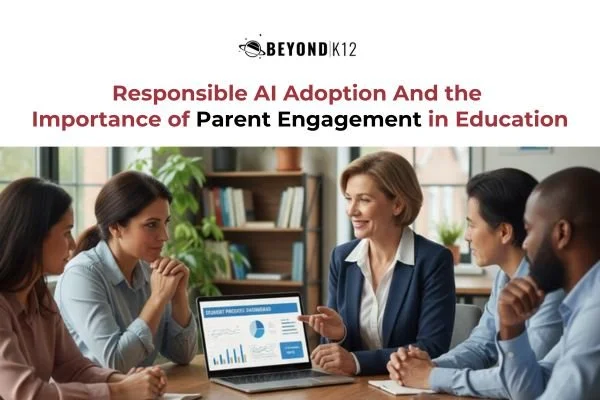
The world of education is changing faster than ever. School leaders are expected to provide not only excellent academic outcomes but also to integrate technology that prepares students for a rapidly evolving digital future. Amid this shift, Responsible AI adoption has emerged as a crucial strategy for schools aiming to innovate while maintaining trust, transparency, and ethical standards. BeyondK12, a leading partner in AI-powered K-12 solutions, provides schools with the guidance, tools, and programs to adopt AI responsibly and effectively.
AI in education is not just about automation; it’s about enhancing teacher capabilities, supporting personalized learning, and creating a safer, more equitable learning environment. But without careful oversight, AI can raise serious ethical concerns, from biased decision-making to privacy issues. Ethical AI integration addresses these challenges head-on, ensuring that technology serves as a tool for growth rather than a source of risk.
Start Today – Make Your Classrooms Future-Ready with AI!
What Responsible AI Adoption Really Means
Responsible AI adoption is more than installing a smart software system in classrooms. It’s a holistic approach where AI tools are implemented under continuous human supervision, ethical guidelines, and a focus on student-centered learning. The core idea is simple: AI should assist, not replace, human judgment in education.
Core Principles of Ethical AI Integration
Human Oversight: AI outputs, from grading suggestions to learning path recommendations, are reviewed by teachers.
Ethical Alignment: Algorithms follow school values and ensure fairness in student assessments.
Data Privacy: Sensitive student data is protected under strict security protocols.
Equitable Learning: AI recommendations are continuously monitored to prevent unintended bias.
Teacher Empowerment: AI augments educators’ abilities, allowing them to focus on creativity and individualized instruction.
By combining technology with human insight, schools can enhance learning outcomes, maintain ethical standards, and foster trust among teachers, students, and parents.
The Role of Parents in AI-Enhanced Schools
Parents are more than observers; they are active partners in responsible AI adoption. Schools that engage parents create transparency, reduce anxiety about technology, and support digital literacy at home. BeyondK12 emphasizes parent engagement because it ensures that AI initiatives align with family expectations and values.
Step-by-Step Approach
Benefits of Engaged Parents
Building Trust: Transparent communication about AI tools reduces skepticism.
Reinforcing Digital Literacy: Parents can guide students on ethical and safe AI use at home.
Collaborative Feedback: Parents provide insights on AI applications, helping improve outcomes.
Accountability and Support: Active parental involvement encourages responsible student interactions with technology.
Engaging parents from the beginning helps schools avoid the pitfalls of AI adoption and positions them as ethical innovators.
How Schools Can Implement Responsible AI
Responsible AI adoption is a strategic process that requires planning, educator training, and parent collaboration. BeyondK12 offers structured programs to guide schools through every stage, ensuring AI tools are integrated safely, effectively, and ethically.
Step-by-Step Implementation
Assessment & Goal Setting: Evaluate the school’s current technology infrastructure, learning objectives, and readiness for AI adoption.
Ethical Framework Development: Establish rules for AI usage, privacy, and fairness to align with school policies.
Gradual Tool Integration: Introduce AI systems in pilot programs, monitored closely by educators.
Parent Orientation Programs: Inform parents about AI, its purpose, and safeguards through workshops and newsletters.
Continuous Monitoring: Track AI outcomes for accuracy, fairness, and educational impact.
Teacher Training: Provide professional development so teachers can leverage AI responsibly and effectively.
This structured approach ensures that schools do not just adopt AI; they adopt it responsibly, gaining tangible educational benefits while mitigating risk.
Personalized Learning at Scale
One of the most powerful outcomes of ethical AI integration is personalized learning. By analyzing student data, AI can identify gaps, recommend targeted resources, and help teachers design individualized instruction. BeyondK12’s AI solutions allow schools to implement personalization without overwhelming teachers.
Benefits for Students
Tailored Instruction: AI identifies unique student needs and learning styles.
Timely Support: Teachers can provide immediate interventions based on AI insights.
Increased Engagement: Personalized content keeps students motivated and invested.
Skill Development: AI-supported lessons encourage critical thinking, problem-solving, and creativity.
Responsible AI adoption ensures personalization complements human teaching rather than replacing it.
Addressing Ethical Concerns
AI is not without risks. Bias, privacy breaches, and over-reliance on automation can undermine learning. Ethical AI integration actively mitigates these issues.
Key Risk Management Measures
Bias Reduction: Human oversight checks AI outputs to prevent inequitable outcomes.
Transparency: Schools maintain clear communication with parents and staff about AI practices.
Data Security: Student data is safeguarded through strict encryption and privacy policies.
Accountability: Teachers and administrators retain ultimate responsibility for AI-driven decisions.
Proactively managing these risks ensures that AI tools enhance education without compromising ethics.
Immediate Action Needed – Transform Learning with Human-Guided AI!
Leadership Advantages
Ethical AI integration transforms how school leaders approach strategy and decision-making. By combining technology with human judgment, administrators can:
Make Data-Informed Decisions: AI insights guide curriculum planning, resource allocation, and student interventions.
Empower Teachers: Educators feel confident using AI tools ethically, improving their instructional impact.
Build Community Trust: Transparent AI practices strengthen relationships with parents and stakeholders.
Ensure Long-Term Innovation: Schools are prepared for continuous technological evolution.
Practical Applications in K-12 Schools
Responsible AI adoption is not theoretical; it’s already transforming educational practices:
Personalized Tutoring: AI identifies gaps, and teachers tailor instruction to individual needs.
Behavioral Insights: AI tracks student engagement trends; human review ensures context-sensitive interventions.
Curriculum Enhancement: Teachers use AI suggestions to enrich lessons and learning experiences.
Administrative Efficiency: AI assists with scheduling, resource allocation, and reporting while educators focus on teaching.
These applications demonstrate that AI supports educators rather than replacing them.
Creating a Future-Ready School Culture
Adopting AI responsibly requires more than technology; it requires a culture of innovation, ethics, and collaboration. BeyondK12 helps schools cultivate this culture through structured programs that integrate AI while prioritizing human oversight and parental engagement.
Key Strategies
Transparent Policies: Clearly define AI use, data handling, and ethical guidelines.
Continuous Learning: Offer regular professional development for teachers and staff.
Parent Involvement: Keep families informed and engaged to build trust and accountability.
Student Empowerment: Encourage students to use AI responsibly, supporting critical thinking and digital citizenship.
Integrating AI Into Everyday Classroom Practices
Ethical AI integration is most effective when it’s part of daily teaching routines rather than a separate tool. BeyondK12 emphasizes blending AI seamlessly with existing curricula to enhance learning without overloading teachers. For example, AI can suggest individualized reading exercises, highlight students who may need extra support, or provide real-time feedback on assignments. Teachers then review these insights, making adjustments as needed. This approach ensures AI becomes a collaborative partner in learning rather than a replacement, allowing educators to focus on creativity, discussion, and mentorship while students benefit from personalized support.
Measuring the Impact of Responsible AI
Track progress using key metrics: student engagement, performance improvements, and teacher satisfaction.
Use BeyondK12 tools to generate reports showing AI contributions to personalized learning and ethical decision-making.
Conduct regular evaluations to identify potential issues like bias or misalignment with learning objectives.
Continuously assess AI’s impact to optimize strategies and maintain accountability.
Ensure AI genuinely enhances the educational experience for every student.
Limited Spots – Book Your AI Strategy Consultation Immediately!
Conclusion
Responsible AI adoption, paired with active parent engagement, is the key to modern, future-ready education. BeyondK12 equips schools with the tools, expertise, and support to integrate AI ethically and effectively. Schools that act now position themselves as leaders in technology-driven learning while fostering a safe, transparent, and collaborative environment.
Schedule your consultation with BeyondK12 today to implement responsible AI strategies that empower students, educators, and the entire school community.
FAQs
1. What is Responsible AI adoption in schools?
Responsible AI adoption ensures AI tools are used ethically, with human oversight, protecting student data and enhancing personalized learning outcomes.
2. How does ethical AI integration benefit students?
It provides tailored learning experiences, timely interventions, and improved engagement while maintaining fairness and ethical standards in education.
3. How can schools involve parents in AI initiatives?
Schools engage parents through workshops, updates, and feedback channels to build trust, digital literacy, and collaboration in AI use.
4. Is student data safe with AI in classrooms?
Yes, Ethical AI integration includes strict privacy protocols, encryption, and human oversight to ensure student data remains secure and confidential.
5. Why should schools adopt Responsible AI now?
Early adoption ensures future-ready strategies, ethical practices, enhanced learning outcomes, and prepares students for a technology-driven world.