
The Role of AI Ethics and Human Judgment in Protecting Student Data in Schools
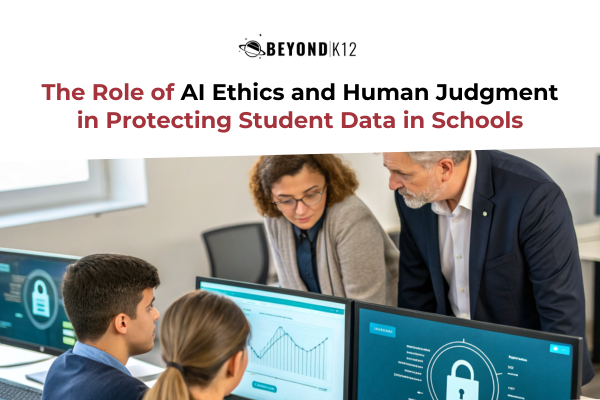
As educational institutions increasingly integrate Artificial Intelligence (AI) into their classrooms, the collection and processing of student data have become a growing concern. AI can provide valuable insights into student learning behaviors, personalize educational experiences, and improve administrative processes. However, the more data AI systems process, the greater the risk to student privacy and data security. This is where AI ethics and human judgment play a pivotal role in safeguarding sensitive student information.
In this blog, we will explore the role of AI ethics and human decision-making in protecting student data in schools, the challenges schools face in ensuring privacy, and how Beyond K-12 helps schools implement ethical AI practices to ensure data protection.
1. Introduction: The Rise of AI and Data Privacy Concerns in Education
Artificial Intelligence is transforming education by offering personalized learning experiences, automating administrative tasks, and improving student outcomes. However, as AI tools collect and process vast amounts of student data—ranging from personal information to learning behaviors—ensuring the privacy and security of this data is becoming a critical challenge. The use of AI in schools must be accompanied by strict ethical standards, human oversight, and robust data protection measures to prevent misuse and protect students' rights.
AI ethics and human judgment are essential for creating a balance between leveraging AI’s potential and safeguarding the privacy of student data. Without proper guidance, there is a risk that the data students share could be misused, misinterpreted, or exposed. Ensuring responsible AI practices is key to building trust among students, educators, and parents.
2. What is AI Ethics and Human Judgment?
AI ethics refers to the moral principles that govern the use of Artificial Intelligence. It involves ensuring that AI technologies are developed and used in ways that are fair, transparent, and accountable. These principles guide how AI systems should process data, make decisions, and interact with individuals, ensuring that they benefit society while avoiding harm.
Human judgment, on the other hand, is the ability of individuals—specifically educators, administrators, and policymakers—to oversee, interpret, and make decisions about AI’s recommendations and outcomes. While AI tools can provide valuable insights, human oversight ensures that AI’s decisions align with ethical standards and the specific needs of students.
When applied together, AI ethics and human judgment ensure that AI technologies are used responsibly, respecting privacy, ensuring fairness, and promoting transparency in decision-making processes, especially in sensitive environments like schools.
3. Why Protecting Student Data is Critical in Schools
As AI tools become more prevalent in educational settings, the data they collect becomes more comprehensive. From academic performance to behavioral insights, AI tools analyze various aspects of student data to personalize learning experiences. While this can significantly benefit students, it also raises concerns about how this data is handled, stored, and protected.
Risks to Student Privacy
Student data is extremely sensitive and must be protected against potential misuse. With the rise of data breaches, cyberattacks, and improper use of information, protecting student privacy is more important than ever. Data vulnerabilities could lead to identity theft, unauthorized access to personal details, and even data manipulation, which can harm students academically and socially.
Moreover, the unauthorized sharing or selling of student data can lead to widespread privacy violations and mistrust in educational institutions. It is critical that AI systems in schools comply with data protection regulations, such as the Family Educational Rights and Privacy Act (FERPA), to ensure that students’ information is kept secure.
4. How AI Ethics and Human Judgment Safeguard Student Data
AI ethics and human judgment work together to create a framework that prioritizes student privacy and ensures that AI systems are used responsibly in schools.
Ensuring Fairness and Transparency
AI algorithms can sometimes produce biased outcomes due to the data they are trained on. For example, if an AI system is trained on biased data, it may make inaccurate or unfair predictions about a student's abilities or potential. Ethical AI use requires transparency in how AI tools make decisions, as well as checks to ensure that these tools are free from biases that could negatively impact certain groups of students.
Human judgment is essential in reviewing the recommendations and decisions made by AI systems. Educators and administrators must ensure that these systems are making fair and equitable decisions, taking into account the unique context of each student.
Ensuring Data Privacy
AI systems can only be as secure as the data protection measures put in place. Ethical AI practices involve robust security protocols to prevent unauthorized access to student data. This includes encryption, secure data storage, and limiting access to sensitive information to authorized individuals only. Additionally, human oversight is necessary to ensure that any data sharing complies with privacy laws and school policies.
Obtaining Informed Consent
Before AI tools collect and analyze student data, it’s essential that parents and students give informed consent. Human judgment ensures that students and their families understand how their data will be used and the potential risks involved. Schools should be transparent about the data they collect and the steps they take to protect it.
5. How Beyond K-12 Helps Schools Implement Ethical AI Practices
At Beyond K-12, we are dedicated to helping educational institutions integrate AI responsibly, with an emphasis on protecting student data and maintaining ethical standards.
AI Ethics Training for Educators
We provide comprehensive professional development programs that teach educators how to use AI responsibly and ethically. Our training covers the importance of data privacy, transparency in decision-making, and how to apply human judgment in interpreting AI-driven insights.
AI Tools with Built-In Data Protection
Beyond K-12 offers AI-powered tools designed with privacy and security in mind. Our tools help schools personalize learning without compromising student data. We ensure that these tools meet all relevant data protection standards, so educators can focus on teaching while maintaining the highest standards of security.
6. Challenges of Protecting Student Data in the AI Era
While AI offers tremendous benefits, the challenges of data protection are significant. Some of the main challenges include:
Data Access and Security
With AI processing large amounts of student data, ensuring that this data is secure and not vulnerable to breaches is paramount. Schools must invest in robust cybersecurity infrastructure and adopt best practices for data encryption and access control.
Compliance with Data Protection Laws
Educational institutions must comply with regulations such as FERPA and the General Data Protection Regulation (GDPR). Ensuring that AI tools comply with these laws while still offering personalized learning solutions can be a complex balancing act.
7. The Future of AI Ethics and Data Protection in Education
The future of AI in education will likely see more sophisticated tools, but with these advancements comes an increased responsibility to protect student data. Schools must continue to prioritize ethical AI use, ensuring that all AI systems are transparent, secure, and free from biases. Human oversight will remain critical, as educators will continue to play an essential role in evaluating and guiding AI applications in the classroom.
At Beyond K-12, we are committed to staying ahead of these challenges and offering solutions that prioritize student privacy while enhancing educational outcomes through AI.
8. Conclusion
AI offers incredible potential to revolutionize education, but it also brings risks that must be carefully managed. By integrating AI ethics and human judgment, we can ensure that AI is used responsibly in schools to protect student data while still providing the benefits of personalized learning and efficient administration.
Beyond K-12 is dedicated to supporting schools in navigating these challenges, providing AI-powered tools that are both ethical and secure.
9. FAQ
What are the risks to student data privacy in schools?
The main risks include data breaches, unauthorized access, and the misuse of personal data. These can result in identity theft or unfair treatment of students.
How can AI ethics protect student data?
AI ethics ensure that AI tools are transparent, free from bias, and secure. Ethical AI practices prioritize privacy, informed consent, and fairness, which are essential for protecting student data.
What role does human judgment play in AI data protection?
Human judgment is essential in interpreting AI recommendations, ensuring that they align with ethical standards, and ensuring that data privacy laws are followed.
How can Beyond K-12 help protect student data in schools?
Beyond K-12 provides AI tools designed with built-in data protection and offers training to educators on ethical AI use, ensuring that student data is handled responsibly.